
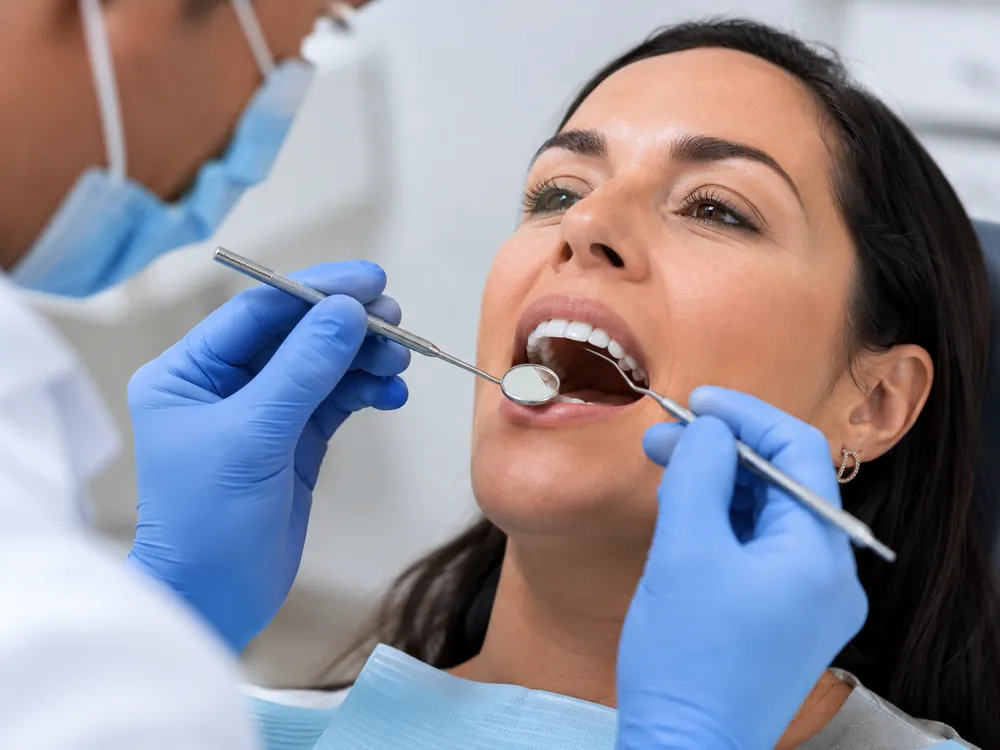
Exams, Cleanings & Fillings
Checkups, cleanings, digital X-rays, oral cancer screening and tooth-colored fillings. The everyday care that keeps small problems small.
Read More about Exams, Cleanings & FillingsHealthy gums hold your teeth in place. We help you stop gum disease early and keep it from coming back.
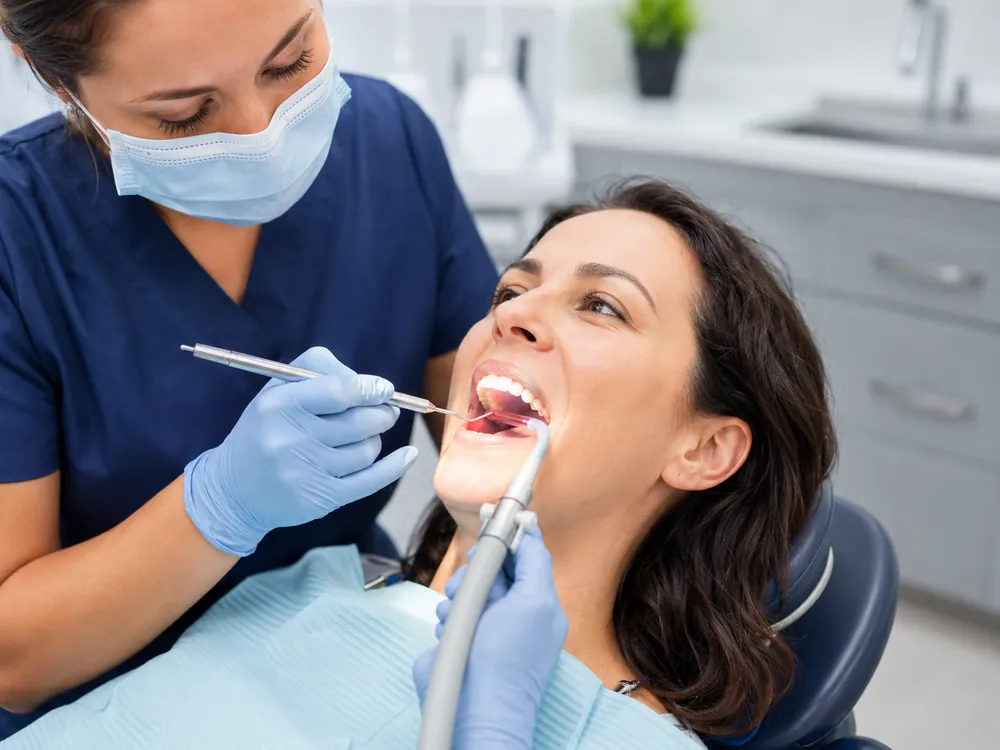
A lot of people think a little pink in the sink is no big deal. It is actually the most common early sign of gum disease, and it is easy to treat when caught early.
Left alone, the bacteria under the gumline slowly damage the bone that holds your teeth. Teeth can loosen, gums can pull back, and the infection has been linked with other health problems like diabetes and heart disease.
The good news: with a thorough deep cleaning and a solid home routine, most patients get their gums back to health. Dr. Patel will measure your gum pockets, explain what the numbers mean, and give you a clear plan.
What we recommend depends on how deep the pockets are and how much bone has been affected.
We numb the area, clean the tartar and bacteria from below the gumline and smooth the root surfaces so your gums can reattach. Usually done in two visits.
An antibiotic placed directly into deeper gum pockets after cleaning. It keeps working for weeks to help pockets shrink. Nothing to swallow, no pain.
For pockets that do not respond to cleaning alone, minor gum surgery can reduce pocket depth or repair receded gums so your teeth are easier to keep clean.
A regular cleaning removes plaque and tartar above and just below the gumline on healthy gums. A deep cleaning goes further down to treat infected pockets on the root surfaces. If your gum pockets measure 4 mm or more and bleed, a regular cleaning simply cannot reach the problem. That is why your dentist may recommend a deep cleaning instead.
Gum disease can come back, so we usually see patients every three to four months after a deep cleaning. These visits keep the pockets clean and let us catch any changes early. Your home care matters a lot too, and we will show you what works best for your mouth, whether that is floss, water flossers or small brushes.
Most dental plans cover deep cleanings at least in part. We will check your benefits and give you a written estimate before we start. See our insurance and payment page for details.
We numb the area first, so most patients feel pressure rather than pain. Your gums may be a little sore for a day or two afterward, which over-the-counter pain relievers usually handle.
We measure the space between your gums and teeth. Pockets of 4 mm or more that bleed, along with bone loss on X-rays, usually mean a deep cleaning is needed.
Early gum disease (gingivitis) can be fully reversed. More advanced gum disease cannot undo bone loss, but treatment can stop it from getting worse and help you keep your teeth.
Arestin is a locally applied antibiotic that we place into deeper pockets after scaling and root planing. It helps reduce bacteria and pocket depth over the following weeks.
Most patients need more than one kind of care over the years. Here is where to go next.
Checkups, cleanings, digital X-rays, oral cancer screening and tooth-colored fillings. The everyday care that keeps small problems small.
Read More about Exams, Cleanings & Fillings
Single tooth implants, implant-supported bridges and implant-retained dentures. A long-term way to replace missing teeth.
Read More about Dental Implants
Zoom whitening, porcelain veneers, Lumineers, tooth-colored bonding and gum reshaping for a smile you like seeing.
Read More about Cosmetic DentistryBook a gum check at our Sugar Land or Houston office. We will tell you exactly where things stand.
Call the office closest to you or send us a message. Our team replies within one business day.